Private Villa,
Sardinia.
A stazzu reinterpreted for the contemporary Mediterranean.
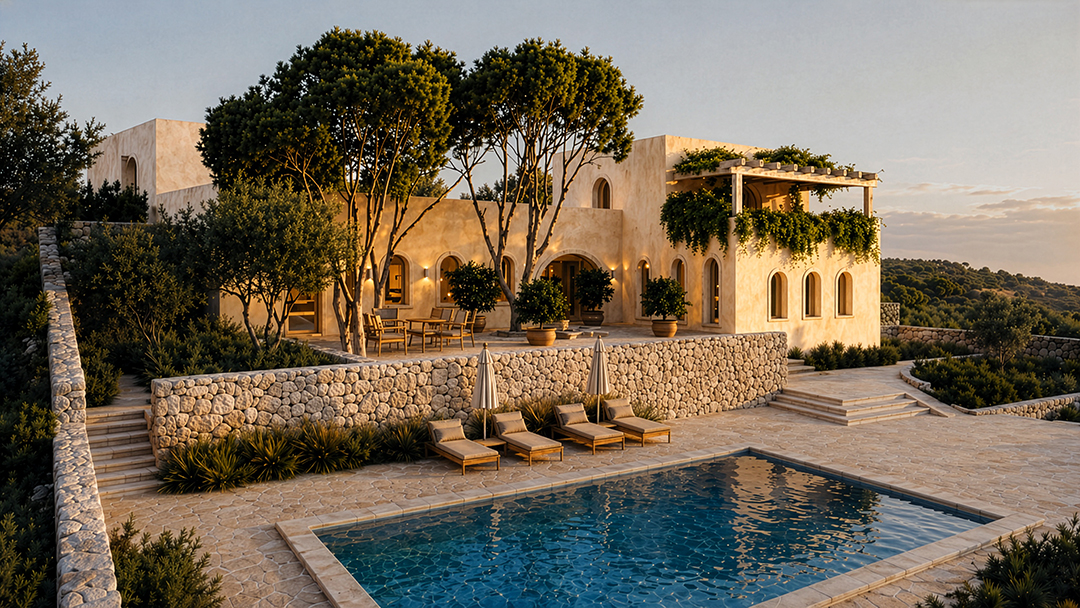
A private residence immersed in the macchia mediterranea of Sardinia’s north-eastern coast. The project is conceived as a contemporary synthesis of the stazzu — the traditional Sardinian rural settlement — structured through a modern spatial logic and climatic intelligence.
Rough lime render, arched thresholds and an inward-facing courtyard establish a dialogue between vernacular memory and architectural precision. The building does not impose itself on the landscape — it negotiates with it.
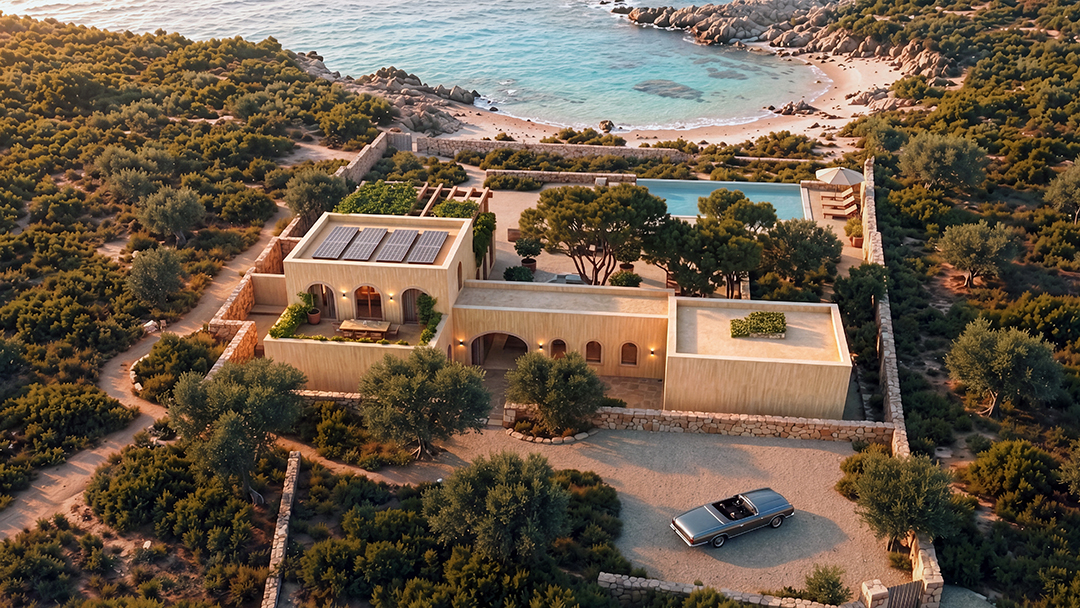
An Interior World, Open to the Horizon.
The compound is organized around a central courtyard — a protected interior world shielded from coastal winds and anchored by a traditional water feature embedded within the gravel floor. All rooms are oriented inward, drawing light and cross ventilation through deep arched openings.
Landscape as Structure.
A lower pool terrace steps down toward the sea view, framed by native agave, mastic and rockrose. Dry-stone perimeter walls built with local granite dissolve the boundary between the built and the natural.
Energy Autonomy.
Solar panels are flush-integrated into the flat roof, delivering energy autonomy without compromising the uninterrupted roofline. Passive cross ventilation and rainwater harvesting complete the environmental strategy.
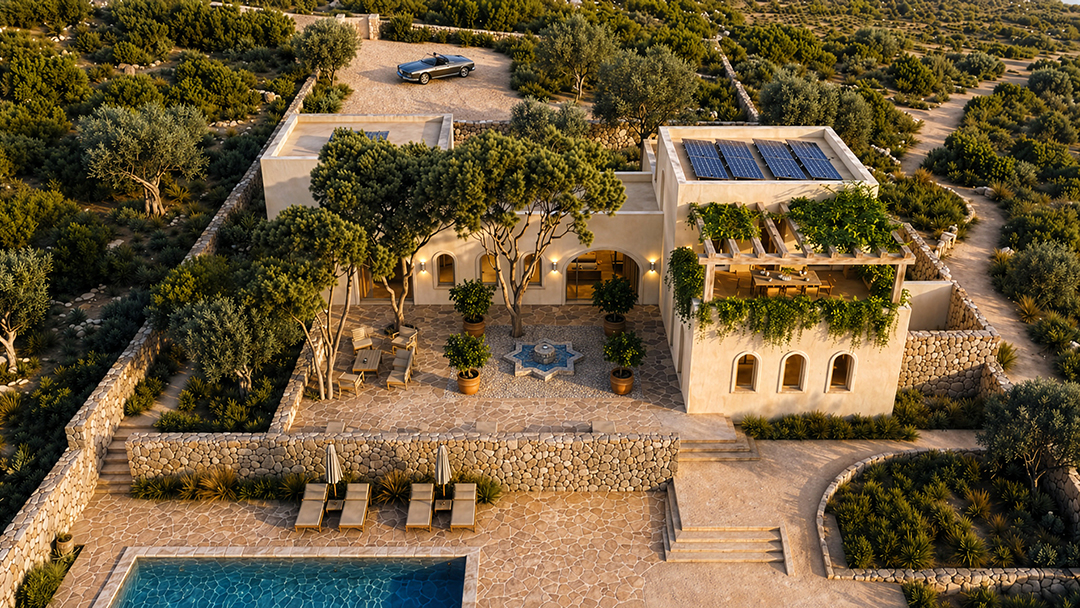
From vernacular memory to contemporary Mediterranean precision.
The elements below operate as an interactive graphic design canvas. The two examples shown here are a curated extract from a broader study of architectural elements developed for the project. Elevation drawings occupy the centre, while vernacular references, detail fragments and application notes orbit around them as layered visual evidence.
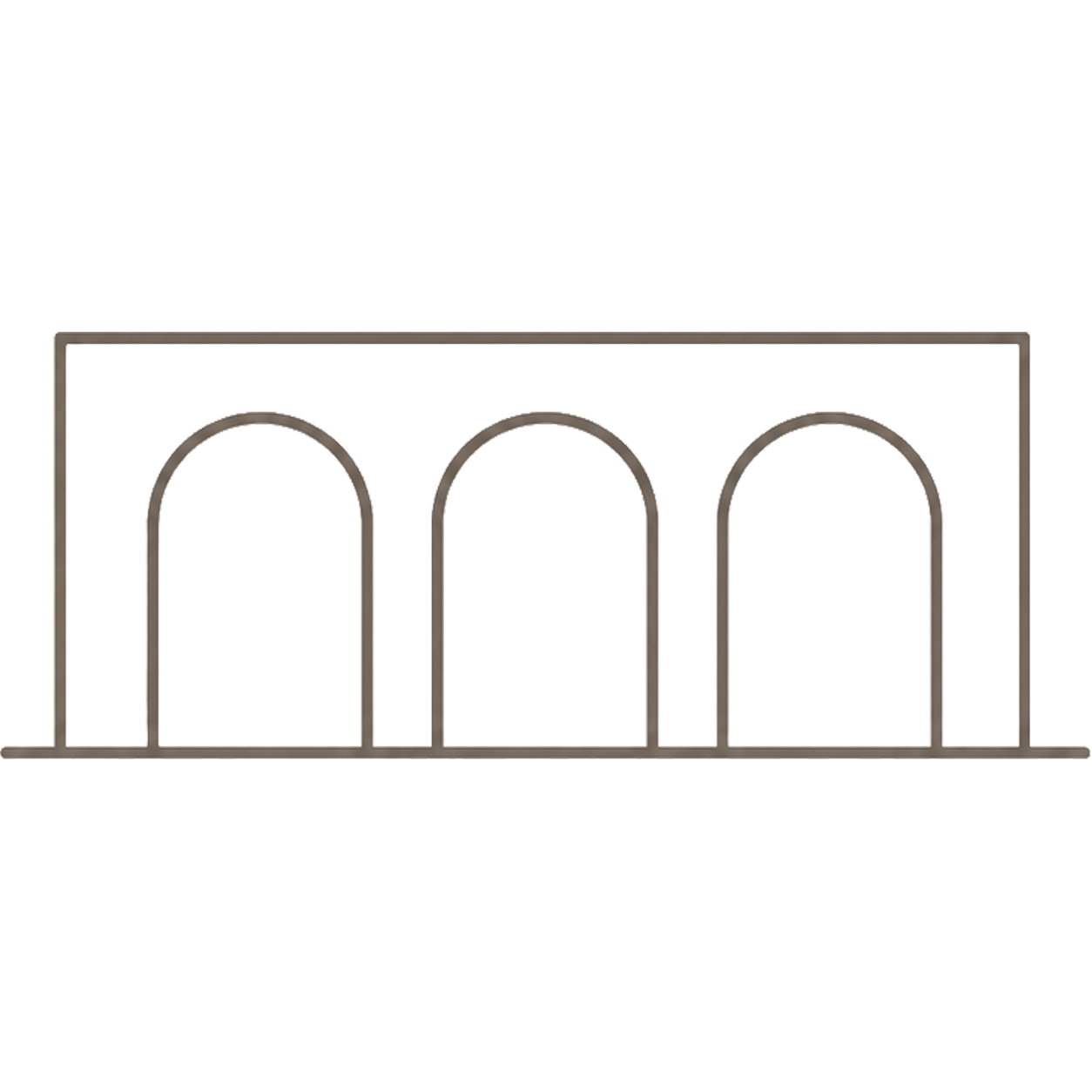
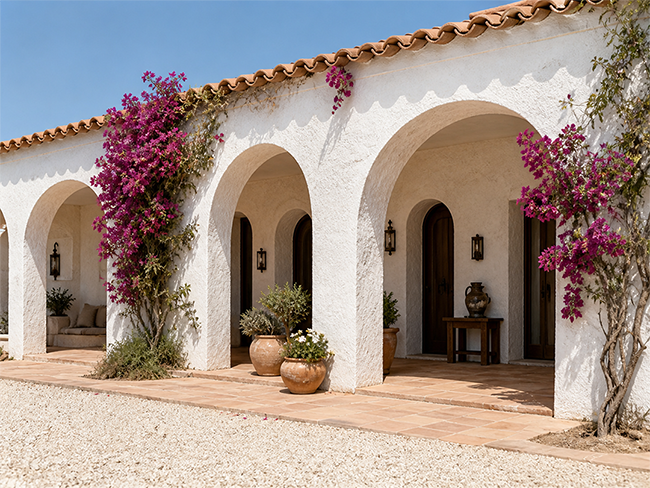
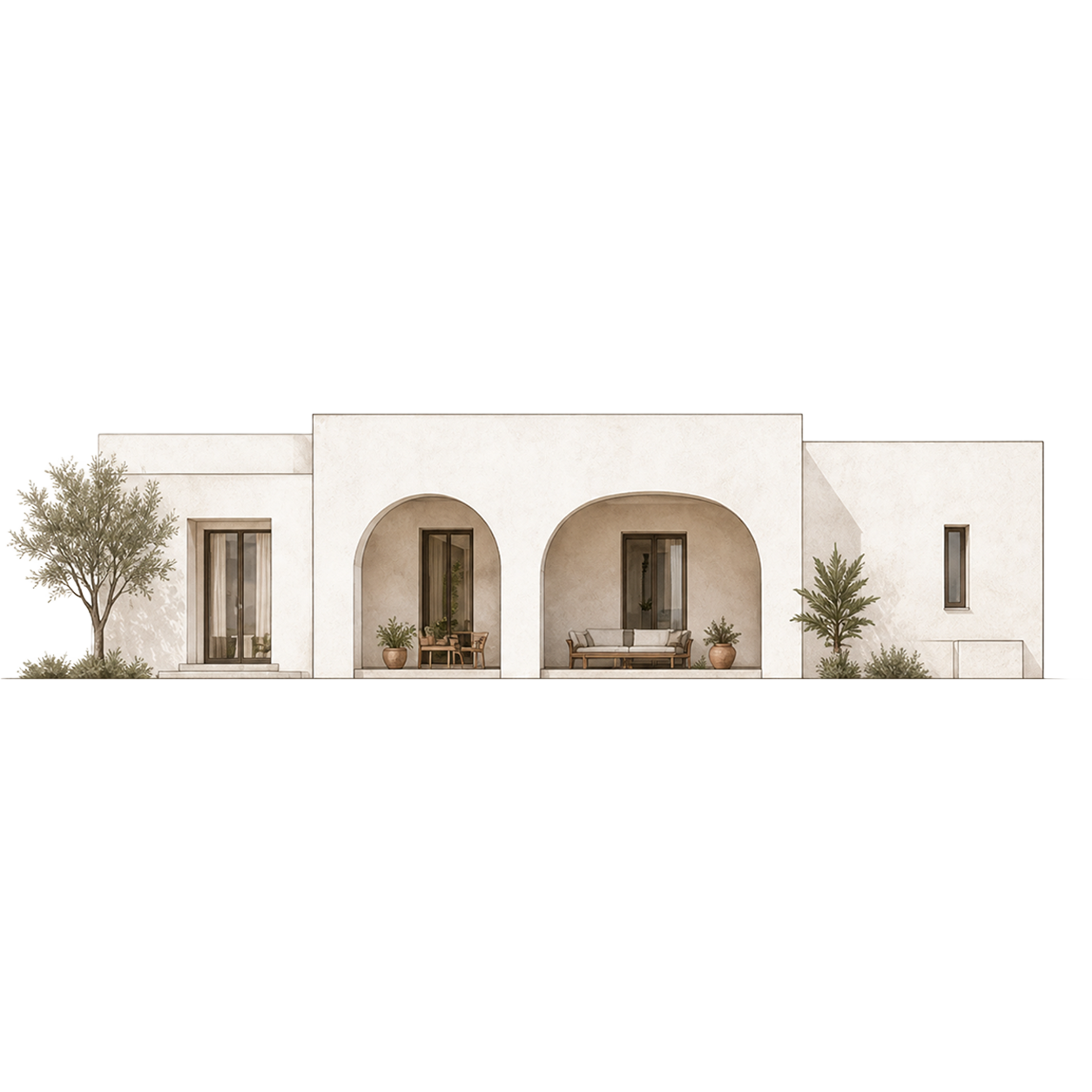
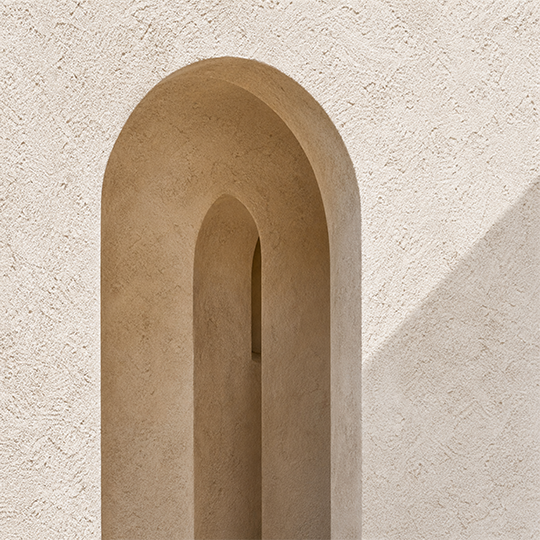

Arched Thresholds
Round arches, porticoes and shaded loggias form the basis of the Mediterranean threshold vocabulary.
Absolute geometric discipline is applied to traditional thresholds, mediating interior coolness and exterior light.
Solid masonry mass, deep shadow and reflected light become the principal architectural device of the villa façade.
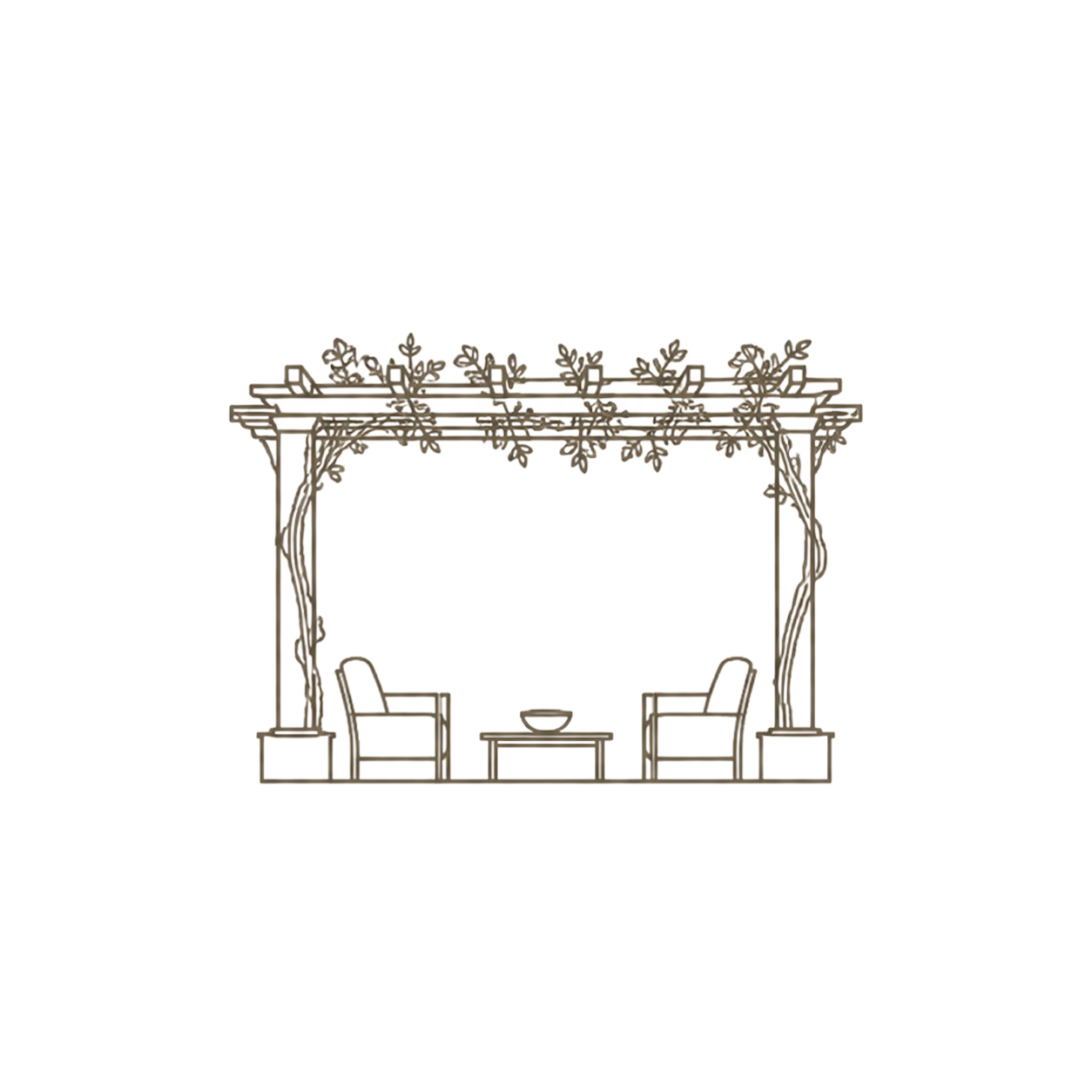
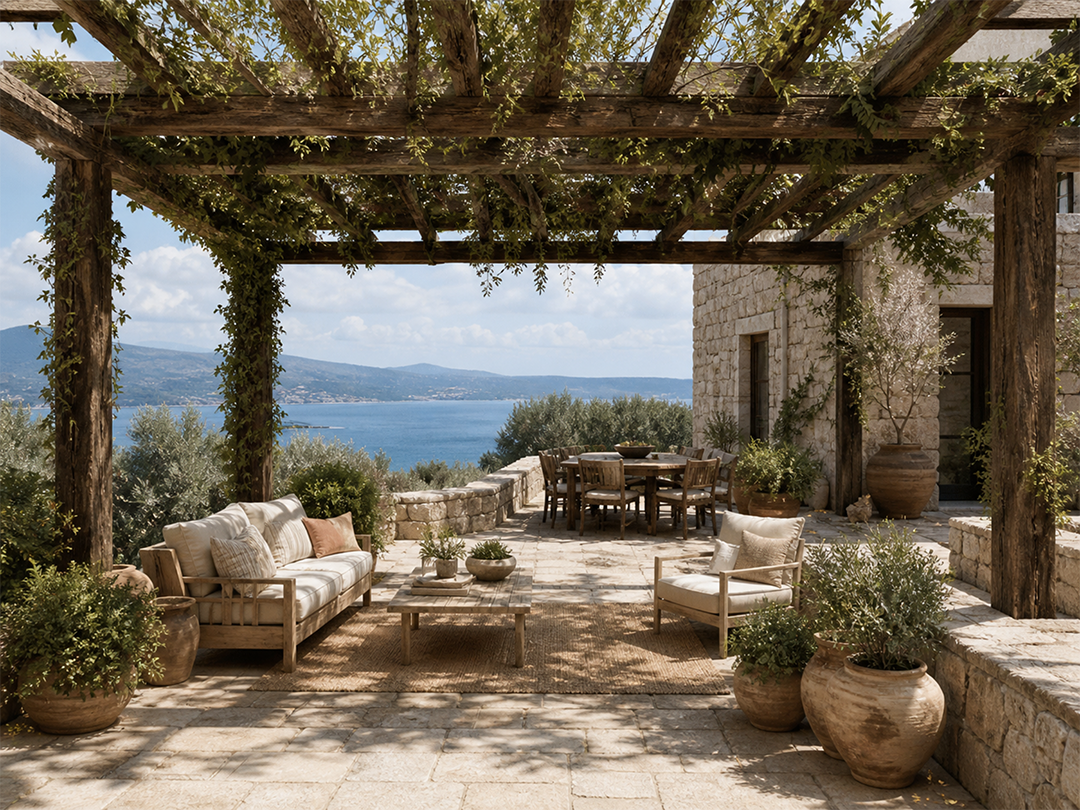
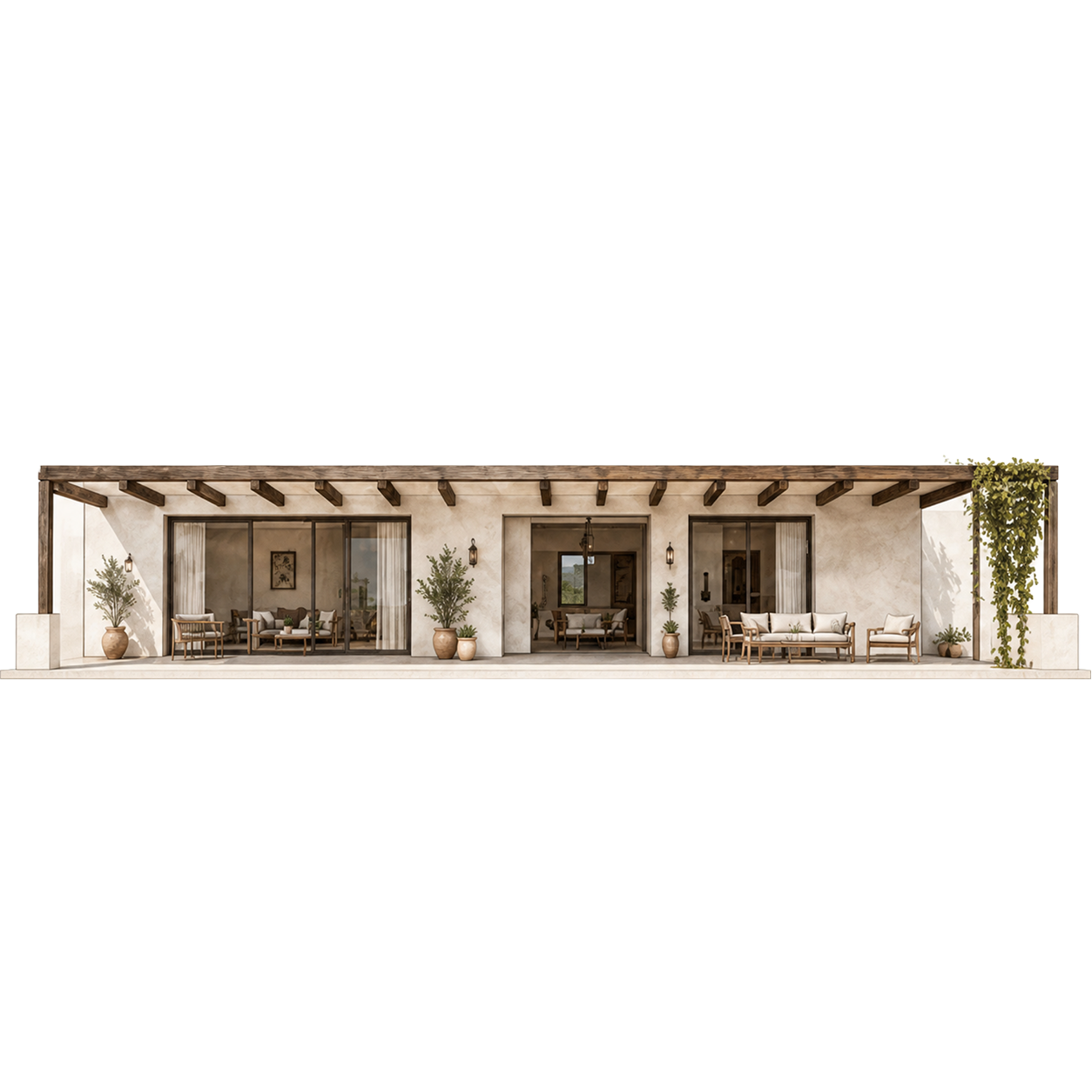
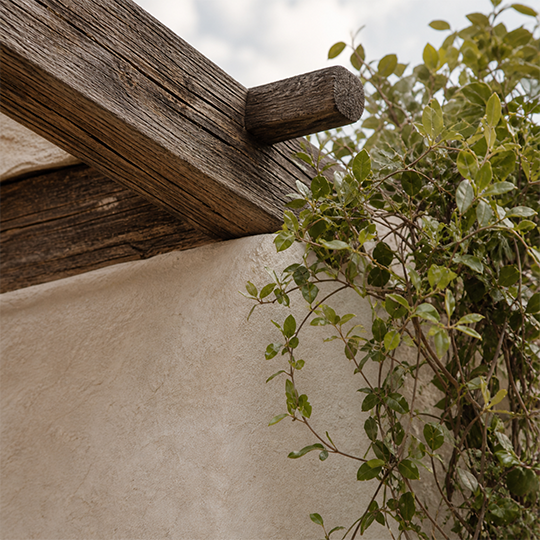

Pergolas and Outdoor Living
Timber pergolas, covered patios and vine-covered terraces mitigate the direct Mediterranean sun.
Outdoor rooms become a primary façade element, extending living space outward with architectural rigour.
Weathered timber structures are integrated into the stucco mass, awaiting native climbing foliage.
Enduring Materiality, Rooted in Place.
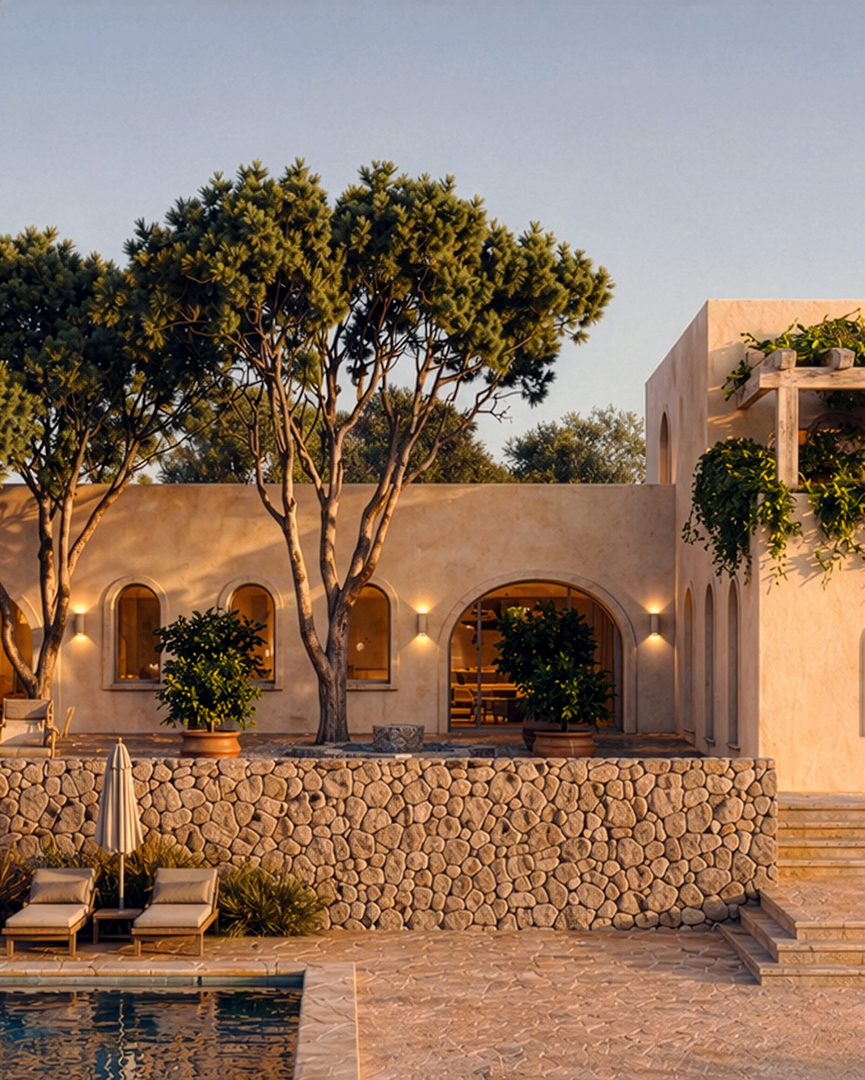
Façade Tap
Hand-applied lime render with local granite aggregates and natural ochre pigment. Texture and tone shift with the quality of Mediterranean light.
Structure Tap
Reinforced concrete frame with non-load-bearing masonry infill, allowing contemporary spatial flexibility while preserving the depth, shadow and thermal mass of Mediterranean masonry construction.
Landscape Tap
Dry-stone walls built with local granite. Endemic planting — mastic, myrtle, agave — preserves the character of the site’s Mediterranean scrubland.
Sustainability Tap
Photovoltaic panels integrated into the roof. Passive cross ventilation through the courtyard geometry. Rainwater harvesting integrated into the terrace drainage system.
Pool Terrace